


 English
 Türkçe
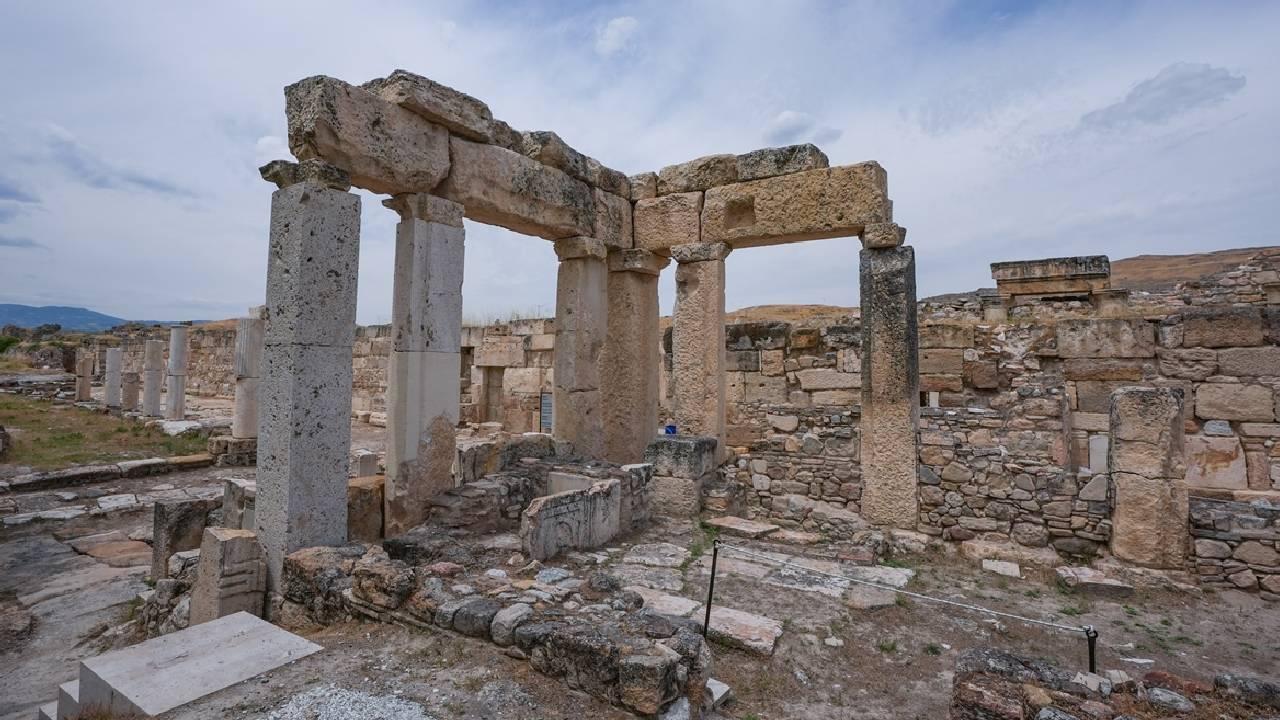
So, you've seen the mesmerizing white travertines of Pamukkale and touched history at the ancient theater of Hierapolis... What's next? How about stepping away from the crowds and finding yourself alone with a history that seems to burst forth from the earth, a place not yet fully discovered? In the heart of Denizli, there lies a secret just 20 km from its famous neighbor Hierapolis and 30 km from Laodicea : the Ancient City of Tripolis. In this article, we will provide you with a list of things to do in the Ancient City of Tripolis and explain why you absolutely must add this hidden gem to your travel plans. Incredible stories, stunning mosaics, and colossal structures await you.
Explore the remains of the Colonnaded Street, theater, and baths
The greatest secret of Tripolis is the soft layer of earth that has preserved it like a time capsule for centuries. Alluvium from the north gradually covered the city with a blanket of soil 3 to 9 meters thick . That's why today, as you walk through the excavation site, you encounter structures that look as if they were built yesterday when the soil is removed. Thanks to this incredible preservation, you have the chance to touch the buildings from the city's most magnificent era, the 2nd century A.D. of the Roman Empire .
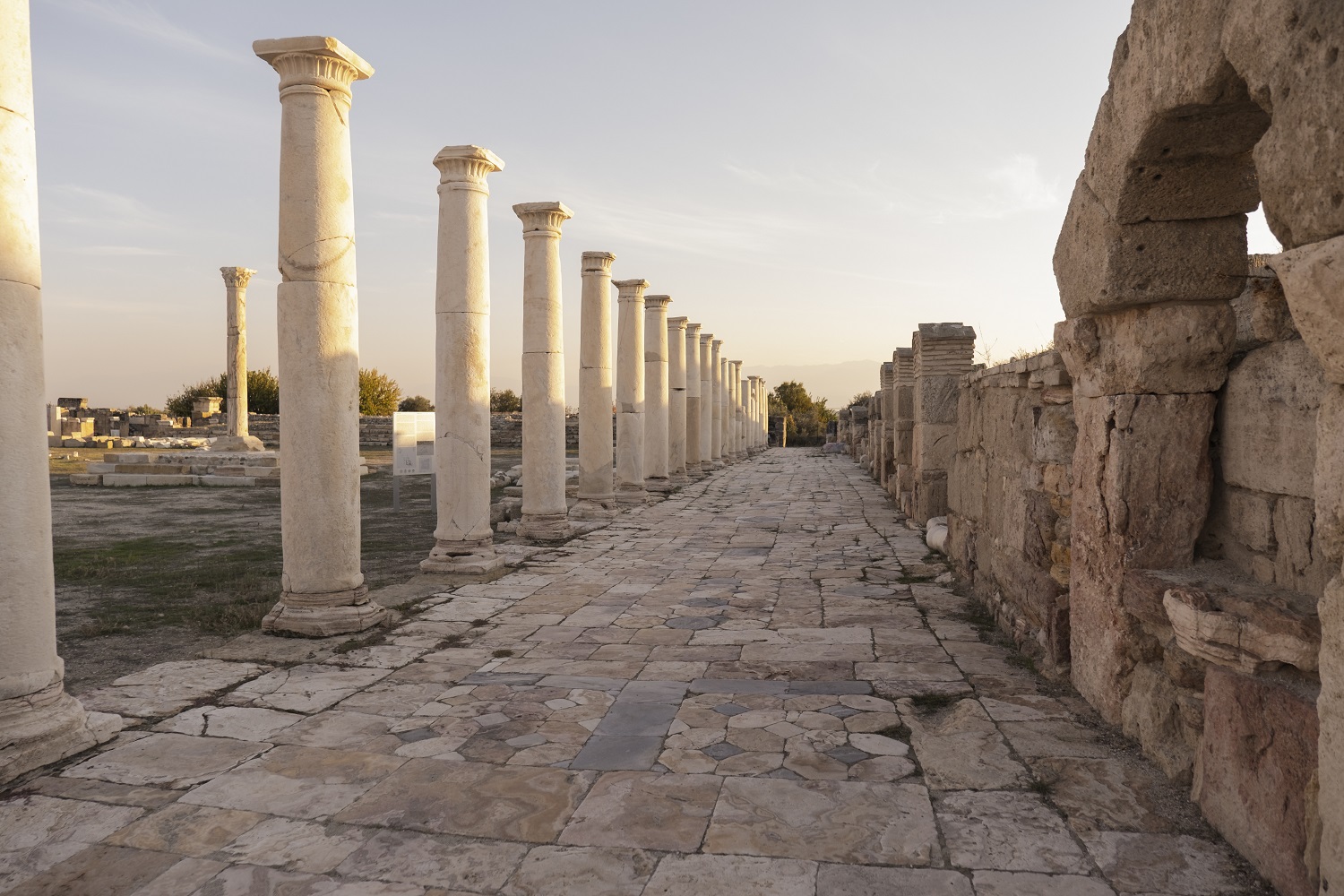
One of the first places to greet you as you enter the city is the Colonnaded Street, where life once flowed. Close your eyes and imagine for a moment: shops (tabernae) lining both sides of the street, Romans shopping, merchants chatting... This was the commercial and social heart of the city. Excavation work first began here, and a magnificent section of the street has been unearthed.
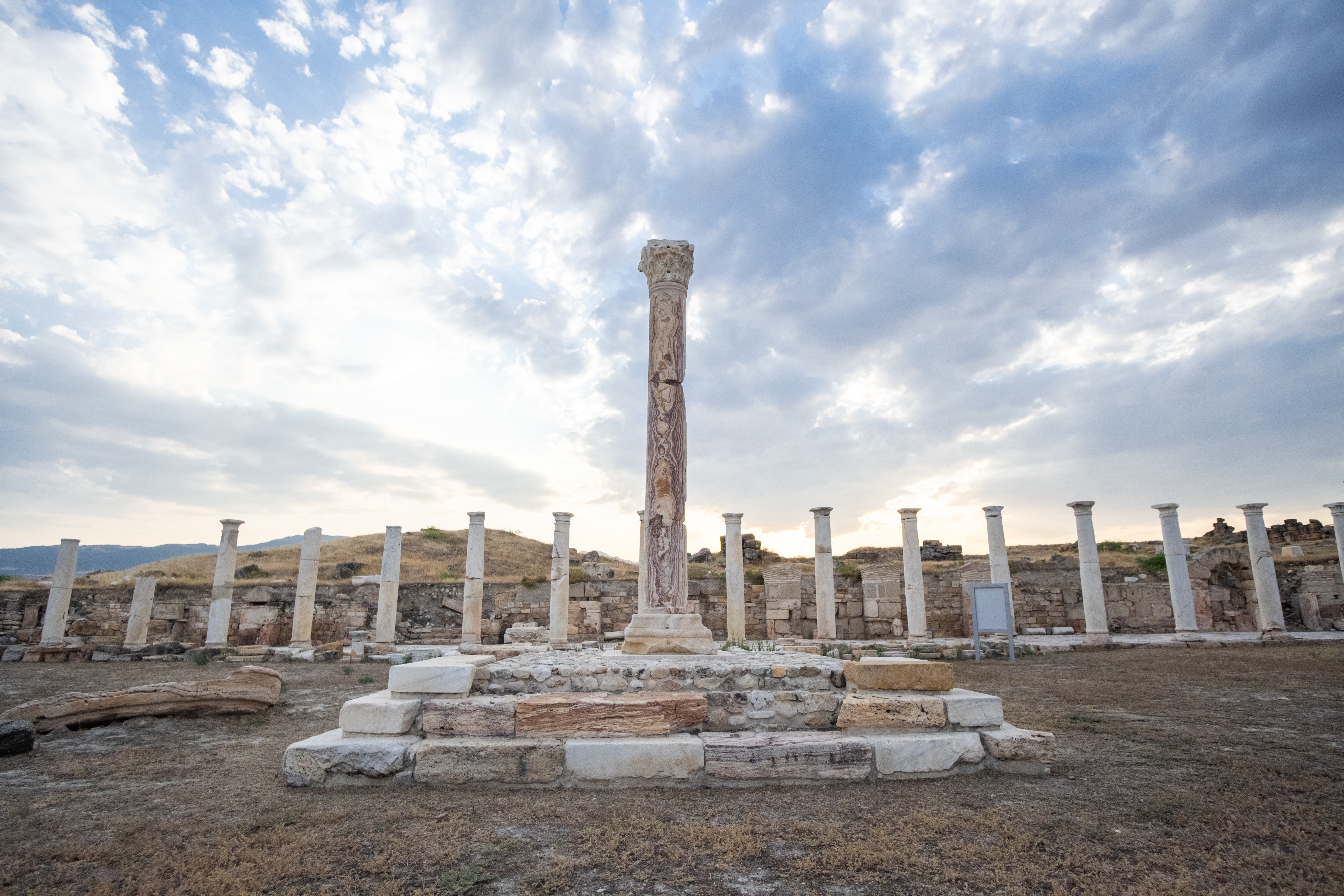
A little further on, the massive theater will welcome you. With a capacity of approximately 8,000 people , this structure shows how cleverly it was built by leaning against the natural slope of the land. As you sit here and watch the view, you can almost hear the echoes of the plays staged and announcements made thousands of years ago. And of course, the indispensable feature of a Roman city: the baths! In Tripolis, there are two large complexes, the Great Bath and the Theater Bath . These structures were not just places for bathing but also the social clubs and gossip centers of their time.
See the well-preserved floor mosaics in the structure called the Mosaic House
Perhaps the most exciting place you'll visit at the excavation site will be a nearly 2,000-year-old villa, which archaeologists have named the Mosaic House. This is not just a ruin; it's a window opening directly into the past. The owner of this 12-room luxury residence is thought to have been a wealthy merchant, likely dealing in agriculture and luxury goods. The perfume and olive oil containers found in the house give us vivid clues about how wealthy this family was and what kind of business they were engaged in.
When you step inside the villa, you will be utterly enchanted. The floors of the rooms are covered with incredibly well-preserved, eye-catching mosaics featuring geometric and floral motifs. In fact, the mosaic in one room covers an area of about 50 square meters. Even the remnants of the colorful frescoes (wall paintings) that once adorned the walls show how magnificent the house once was.
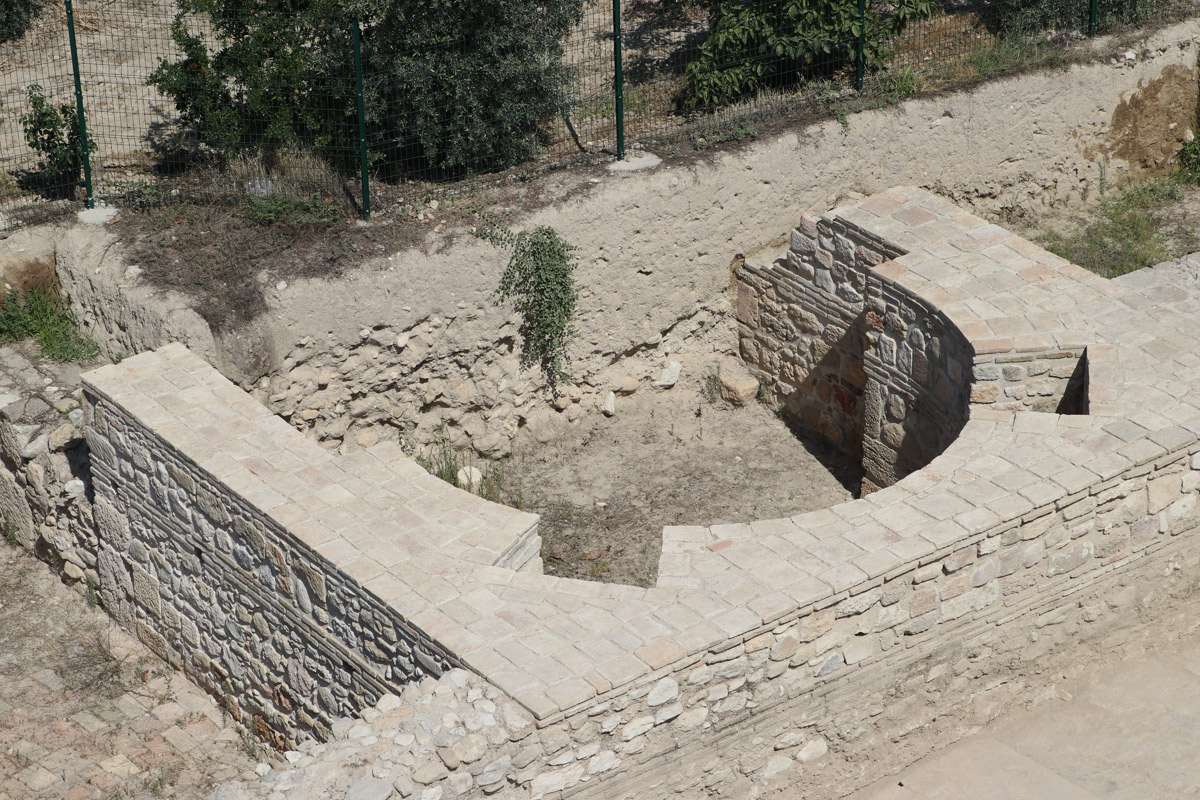
But that's not the most surprising detail. Get ready for this: the sewage system of this 2,000-year-old villa is still working! Yes, you heard that right. It's impossible not to admire the genius of Roman engineers. Remember, the house you see is just one part of an entire neighborhood that is slowly being brought to light. Who knows what other secrets future excavations will reveal.
Feel the historical texture of this rich city dating back to the Lydians
The story of Tripolis doesn't begin with the Romans. The ground beneath your feet has a much deeper history. Sources indicate that the city was first founded during the time of the Lydian Kingdom, under the name Apollonia . So, will we be able to see what remains of the Lydians? The answer to that question is a bit complex. The magnificent structures you see—the theater, the baths—all belong to the city's golden age, the Roman period . However, this doesn't mean the Lydian heritage has vanished. On the contrary, every Roman stone you step on rises upon a Lydian foundation.
The Lydians didn't establish this city here for no reason. Tripolis was at a strategic crossroads, at the intersection of three important ancient regions: Lydia, Phrygia, and Caria . This was the source of the city's wealth and importance. In fact, the name Tripolis means Three Cities, alluding to this unique location. The Romans inherited this legacy and expanded it even further.
As you wander through Tripolis, try to feel not only the splendor of Rome but also the whispers of a civilization thousands of years older upon which that splendor was built. This is the key to understanding the city's soul. Every stone tells the story of a different era.
While You're Here...
If you wish to continue your journey after getting lost in the enchanting atmosphere of Tripolis, Denizli will be generous to you. If you want to combine your Tripolis trip with other wonders the region has to offer, be sure to check out our comprehensive Denizli Places to Visit guide. Of course, a visit to the world-famous Hierapolis Ancient City, just 20 km from Tripolis, is a must. Additionally, the Ancient City of Laodicea, home to one of the seven churches mentioned in the Bible, Karahayıt with its healing red waters, and Kaklık Cave, known as the underground Pamukkale, could also be on your list.
Perhaps the most touching story of Tripolis is that after being abandoned due to earthquakes and invasions, the descendants of its people, living in nearby villages, returned to these lands in 1975, a full 1300 years later. This city is not just an archaeological site; it is also a monument to a life reborn from its ashes.
Bibliography For more in-depth information about the ongoing excavation work at the Ancient City of Tripolis and the latest academic findings, you can visit the official page of Pamukkale University, which conducts the excavations (https://www.pau.edu.tr/tripolis/en).
Frequently Asked Questions (FAQ)
1. Is there an entrance fee for the Ancient City of Tripolis? What is the current price for 2025? We have great news! Entrance to the Ancient City of Tripolis is currently completely free. A Museum Pass is not required. This makes it a very attractive alternative compared to paid sites like Pamukkale .
2. What are the visiting hours for the Ancient City of Tripolis? The Tripolis archaeological site is open every day of the week. Visiting hours vary by season:
Summer Period (April 1 - October 1): 08:00 - 19:00
Winter Period (October 1 - April 1): 08:00 - 17:00 .
3. Where is the Ancient City of Tripolis and how can I get there? The Ancient City of Tripolis is located within the borders of the Yenicekent neighborhood in the Buldan district of Denizli province . It is approximately 40 km from the center of Denizli. You can easily reach it with a private car or use the minibuses heading to Buldan.