


 English
 Türkçe
When you think of Denizli, the first thing that comes to mind is Pamukkale with its snow-white travertines, right? You're right, that enchanting white paradise is truly the star of the city. But can I let you in on a secret? Just across the hill from Pamukkale lies a treasure just as magnificent and vast, overlooked by most travelers: the Ancient City of Laodikeia. If you're thinking, I've seen Pamukkale, what else is there in Denizli? then let me take you on an unforgettable journey into the heart of one of history's wealthiest metropolises. So, what are the things to do in the Ancient City of Laodikeia? Fasten your seatbelts, because we're going back in time!
This city, once the capital of textiles, trade, and art, takes its name from Queen Laodike, the beloved wife of the Seleucid King Antiochus II.1 This romantic beginning alone is enough to understand the city's soul. It was a true superpower, founded at the crossroads of Anatolia's most important trade routes, dazzling with its wealth, and even minting its own coins.3 Now, let's get lost in the streets of this magnificent city and witness history together.
Visit one of the Seven Churches mentioned in the Bible
One of the first steps you'll take while exploring Laodikeia will lead you to a place that is not only archaeologically but also spiritually profound. The ruins before you are not just any ancient structure; they are one of the most sacred sites for the Christian world, one of the Seven Churches of Asia mentioned in the Book of Revelation in the Bible.5 Just imagine, you are standing right in front of a structure mentioned in a text considered holy by millions. That alone is enough to give you goosebumps.
This massive church, built shortly after Constantine the Great legalized Christianity in 313 AD, is proof of how important a religious center Laodikeia became during the Early Byzantine Period.5 You will be amazed by the incredibly beautiful geometric and floral mosaics on the floor, the majestic standing columns, and especially the unique cross-shaped baptismal pool used for baptism ceremonies.8
However, there is another interesting detail that makes this church so special. Laodikeia was one of the wealthiest cities in the ancient world, and this wealth was the main reason for the city's criticism in the Bible. The city's prosperity was so high that it was thought to have fallen into a state of spiritual complacency. That is why the Church of Laodikeia is criticized in the Bible for being neither hot nor cold, but lukewarm. As you walk among those ruins today, you can feel the traces of this incredible material wealth and the great spiritual debates it brought with it in every stone.
Walk among the restored majestic columns on Syria Street
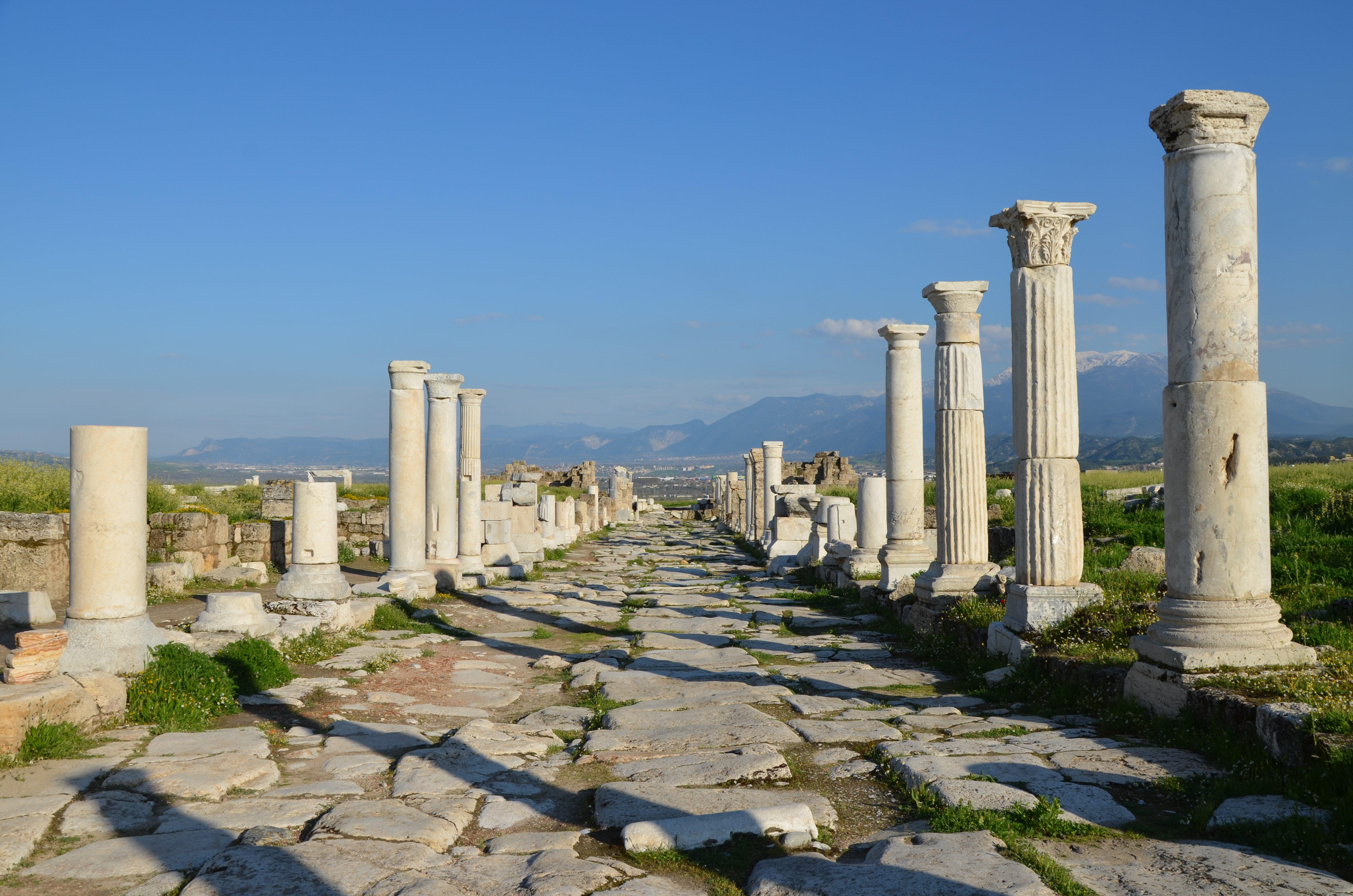
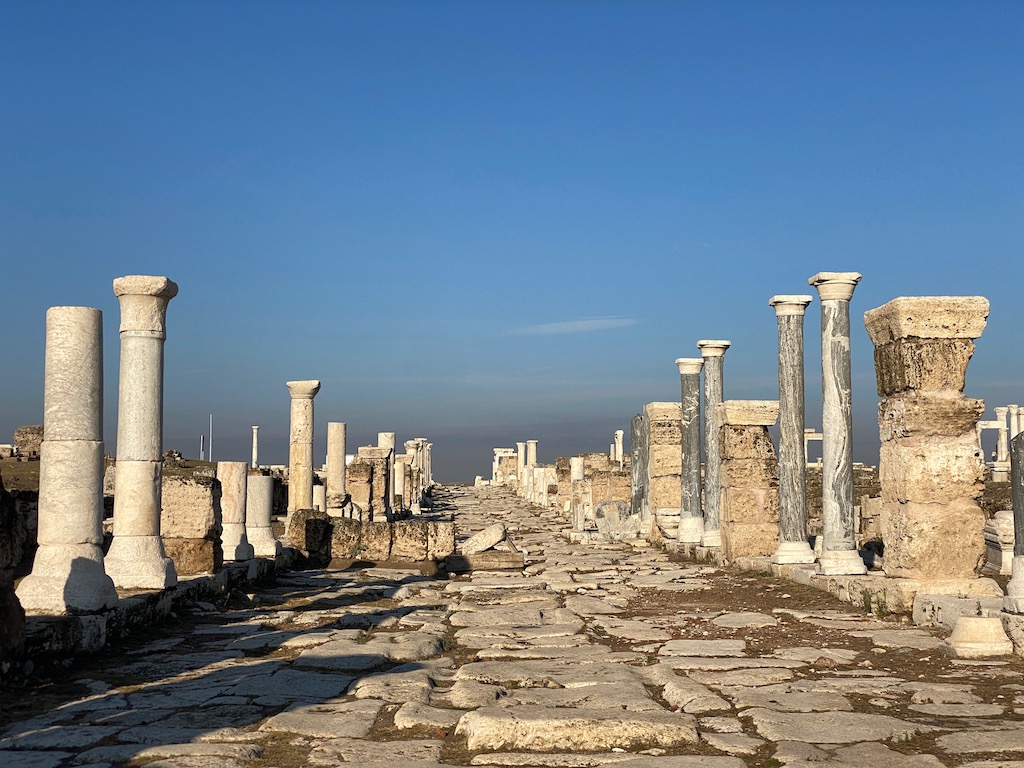
As you leave the spiritual atmosphere of the church and head towards the heart of the city, a sight that feels like stepping into a time machine will greet you: Syria Street. This was Laodikeia's busiest main artery; a 900-meter-long boulevard extending from the city center to the Syria Gate in the east.9 Close your eyes for a moment and imagine: a vibrant street lined with shops on both sides, shaded by covered porticoes, with wealthy merchants in togas, Roman soldiers, and locals walking on its marble pavement.
ile ilgili yüksek çözünürlüklü, canlı bir görsel gelecek]
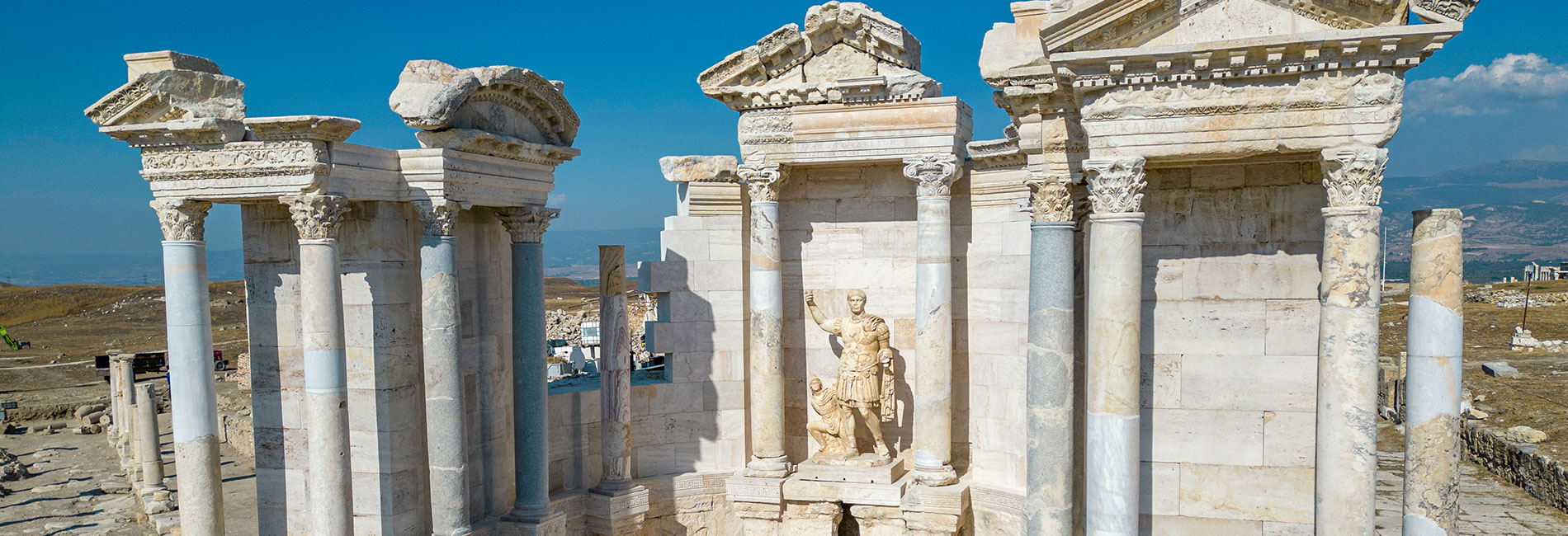
What makes walking on this street so impressive today is a magnificent restoration technique called anastylosis. Like assembling a giant jigsaw puzzle, archaeologists have found the original columns, bases, and stones that were toppled by earthquakes centuries ago and placed them back in their original spots.10 So, what you see is not a replica, but history itself, reborn from its ashes. Walking on this street is not like looking at artifacts behind glass in a museum; it's like becoming a part of that era.
In fact, every restored column on Syria Street is a monument not only to Rome's engineering genius but also to Laodikeia's resilient spirit against earthquakes. The city, which was destroyed by major earthquakes multiple times throughout its history 3, managed to rise again each time thanks to its wealth. As you walk down this street, you are witnessing the final act of a survival story that spans thousands of years.
See the ruins of one of Anatolia's largest stadiums
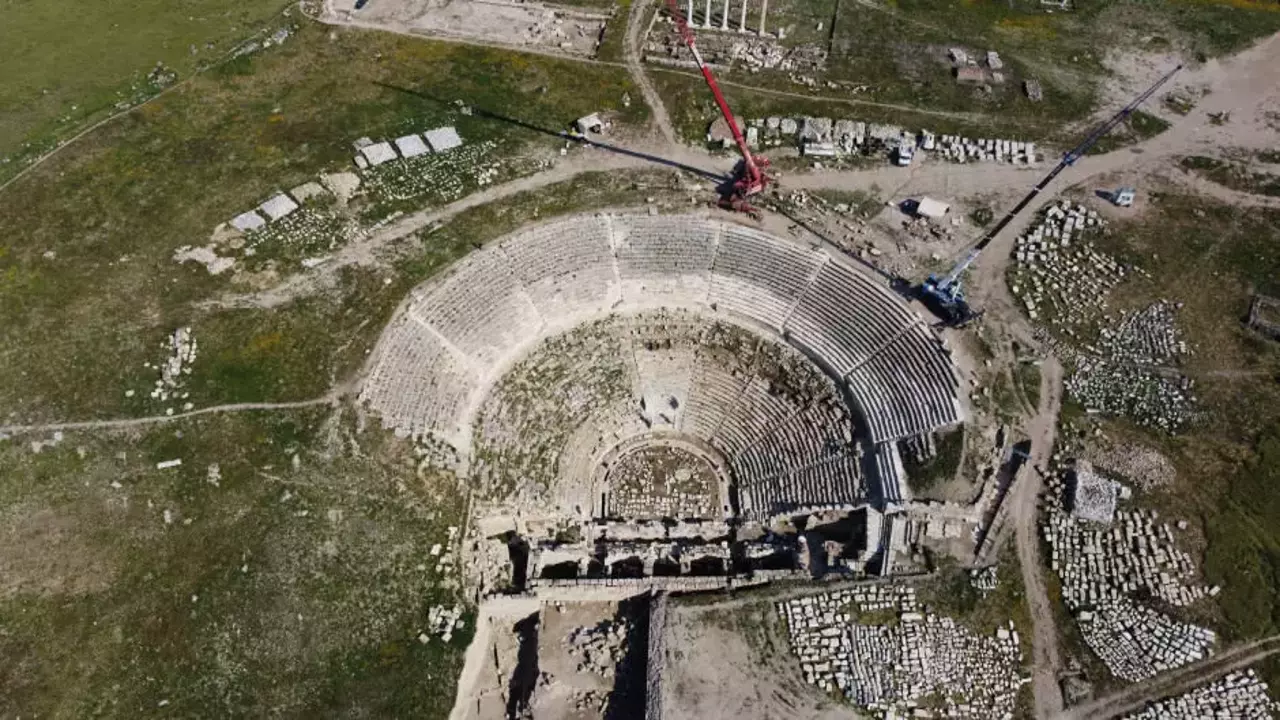
There is one more place you must see to understand just how large and powerful a city Laodikeia was: its massive stadium. Located at the southwestern end of the city, this structure was one of the largest in Anatolia, measuring approximately 285 meters in length and 70 meters in width.13 With a capacity of about 20,000-25,000 people, it could host almost as many people as a modern stadium.3
Built in 79 AD and dedicated to Emperor Titus 13, this stadium was the center of the city's social life. Try to imagine yourself sitting in the stands, feeling the excitement of thousands of people watching athletic competitions, wild animal fights, and perhaps even gladiator contests in the arena. Although a large part of it has been destroyed over time, the remaining ruins still reveal how imposing the original structure must have been.
This huge stadium and the two large theaters at the other end of the city 14 are the most concrete evidence that Laodikeia's wealth was not limited to trade. The city administration invested the incredible fortune obtained from textiles and commerce into these monumental structures to entertain the public and display the city's splendor to the entire Roman Empire. This stadium was Laodikeia's way of saying, I am here, and I am very powerful.
What Else to See Nearby?
If you want to continue your tour after being captivated by the magic of Laodikeia, Denizli offers you wonderful options.
Hierapolis and Pamukkale: The inseparable duo just 10 km away from Laodikeia. After walking on the white travertines of Pamukkale, don't forget to add the Hierapolis Ancient City right next to it to your itinerary. Visiting both ancient cities in one day can be a great idea.
Tripolis Ancient City: If you can't get enough of ancient cities, you can also visit this lesser-known but impressive city on the road to Buldan. You can check our list which includes Tripolis, another important settlement in the region Ancient City of Tripolis.
Karahayıt and Kaklık Cave: For a different experience, you can see the red thermal waters of Karahayıt near Pamukkale or explore the fascinating stalactites and stalagmites of Kaklık Cave, also known as the Underground Pamukkale.
Practical Information for Planning Your Visit
| Category | Information | Notes |
|---|---|---|
| Entrance Fee | Varies. | Prices are updated frequently. Fees for foreign tourists may be in Euros. Müzekart is valid. It's best to check the official website before you go. |
| Visiting Hours | Summer (April 1 - Oct 1): ~08:00 - 19:00/21:00 Winter (Oct 1 - April 1): ~08:00 - 17:00 | Hours may vary by season and public holidays. The ticket office usually closes 30-60 minutes before the closing time. |
| Location | 6 km north of Denizli city center. | Located within the boundaries of Eskihisar, Goncalı, and Bozburun neighborhoods. Easily accessible via the Denizli-Pamukkale road. |
| Transportation | Private car or public transport. | Accessible by Pamukkale or Korucuk minibuses departing from Denizli Bus Terminal. |
Frequently Asked Questions (FAQ)
How long does it take to visit the Ancient City of Laodikeia?
Since the city covers a very large area , we recommend setting aside at least 2-3 hours to comfortably see the main structures (Church, Syria Street, Stadium, Theaters). If you want to explore all the details and fully experience the atmosphere of the ancient city, this could take up to half a day.
Is the Müzekart valid in Laodikeia?
Yes, the Müzekart is valid at the Ancient City of Laodikeia. However, it is advisable to check the official announcements from the T.C. Ministry of Culture and Tourism for current conditions, card types, and validity before your visit.
What is the best time to visit Laodikeia?
Considering the summer heat of the Aegean Region, the best times to visit the ancient city are in the spring (April-May) and autumn (September-October). During these periods, the weather is ideal for sightseeing, and nature displays its most beautiful colors. If you plan to visit in the summer, we recommend going early in the morning or late in the afternoon to avoid the scorching heat.
Bibliography
Laodikeia Excavation Directorate, Pamukkale University. (https://laodikeia.pau.edu.tr/)