


 English
 Türkçe
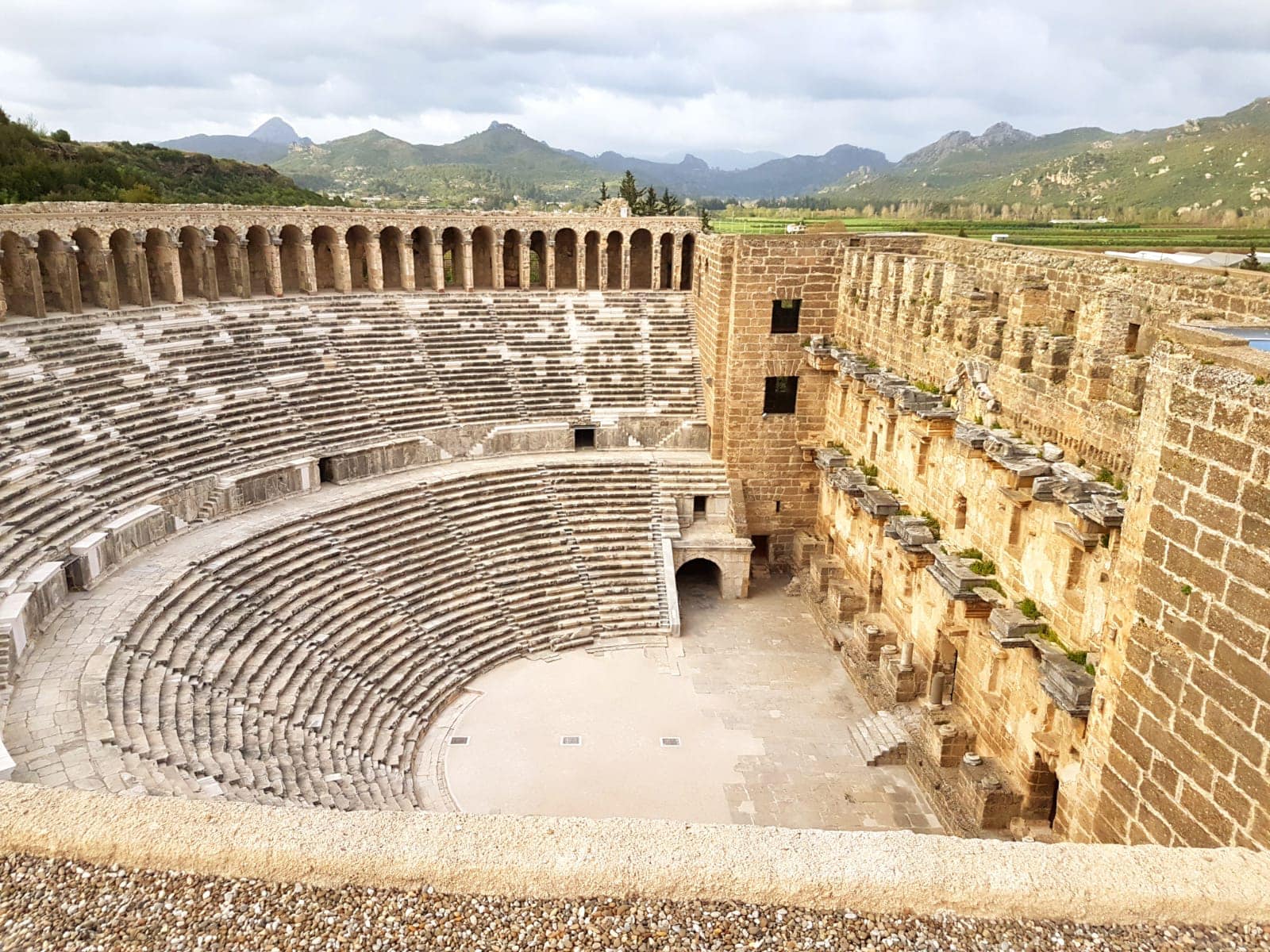
Imagine a theatre where you can hear the sound of a coin dropped on the center of the stage from the very top row, a 2000-year-old whisper that reaches us today. This isn't a myth; it's Aspendos itself, defying time in the Serik district of Antalya. If you're preparing your list of things to do in Aspendos during your Antalya trip, you're about to visit not just an ancient theatre, but a timeless masterpiece of Roman engineering and art. This magnificent structure, brought to life by the genius of architect Zenon, and the colossal aqueducts right next to it, promise you an unforgettable journey through history. If you're ready, let's follow this ancient whisper!
Test the acoustics of the world's best-preserved Roman theatre
The magic of Aspendos begins with its legend, passed down through generations. According to the tale, the king of Aspendos had a beautiful daughter and would marry her to the man who provided the greatest service to the city. Two talented architects enter the competition. One builds the magnificent aqueducts that bring water to the city from mountains miles away; the other builds this very theatre that still inspires awe today. The king is so impressed by the life-giving aqueducts that he decides to give his daughter to their architect. However, he wants to take one last look at the theatre. As he wanders through the top galleries, he hears a clear whisper from the stage: The king's daughter must marry me. The owner of this whisper is none other than the architect Zenon, speaking through his creation. The king is so captivated by this incredible acoustic that he marries his daughter to the theatre's architect.
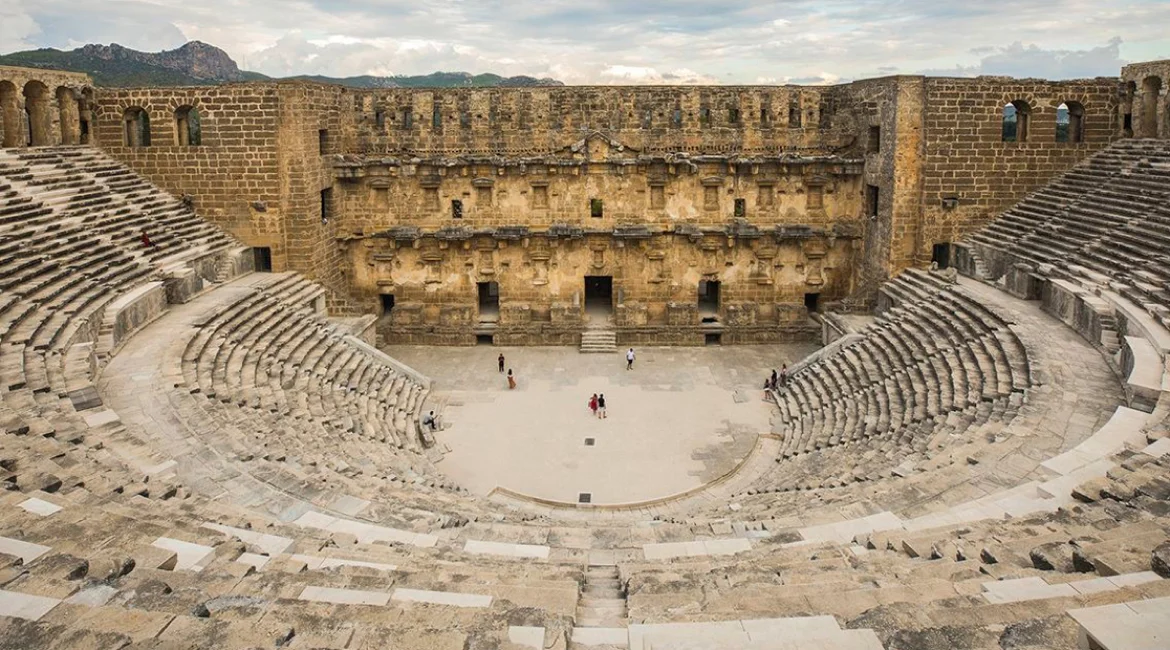
This charming story is more than just a narrative immortalizing Zenon's genius. It's one of history's most successful marketing campaigns, translating the theatre's most complex engineering feature—its acoustics—into a form that everyone could understand and pass down for generations. Thanks to this legend, this technical feature of the structure has moved beyond academic texts to become a part of popular culture. Now it's your turn! Go to the center of the stage and ask a friend to climb to the highest steps. Speak in a whisper or drop a coin on the ground. Witness with your own ears the miraculous acoustics that convinced the king 2,000 years ago. The greatest modern proof of this unique acoustic is the annual International Aspendos Opera and Ballet Festival, which brings this historic stage to life with art.
Climb to the top rows of the theatre and enjoy the view
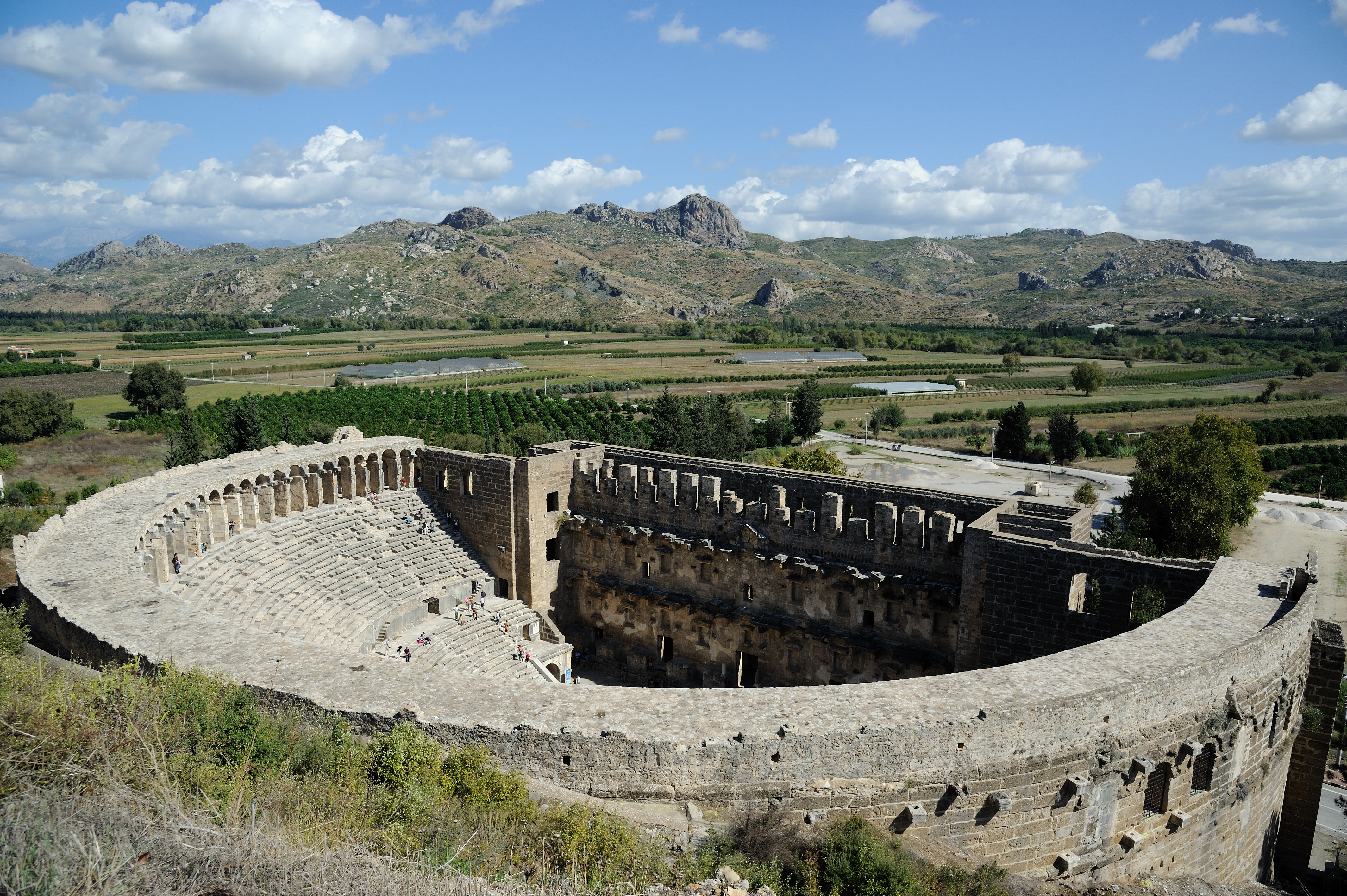
With every step you take climbing the thousand-year-old stone stairs, you don't just ascend; you travel back in time. The shrinking stage below and the massive cavea (seating area) surrounding you instantly transport you to the glorious days of the Roman era, to the excitement of gladiator fights and theatrical plays. When you reach the top row, a breathtaking panoramic view awaits you. The intricate architecture of the stage building (scaenae frons), the harmony of the Ionic columns on the lower level and Corinthian columns on the upper, and the sense of scale created by its capacity of approximately 15,000-20,000 people will leave you dizzy. The fertile Antalya plain, visible from the hill the theatre leans against, completes this historic picture.
So, what is the secret that makes Aspendos so special and has kept it standing for thousands of years? The answer lies not only in the genius of Roman architects but also in the foresight of the Seljuks. While many ancient structures were used as quarries by later civilizations and destroyed, the Seljuks saw this building not as a ruin but as a palace and caravanserai and continued to use it. In this way, Aspendos was saved from the fate of other ancient cities and has survived to this day like a time capsule. So, when you look down from the top, you are not just looking at a Roman theatre, but also at a Seljuk palace.
Explore the nearby historic aqueducts
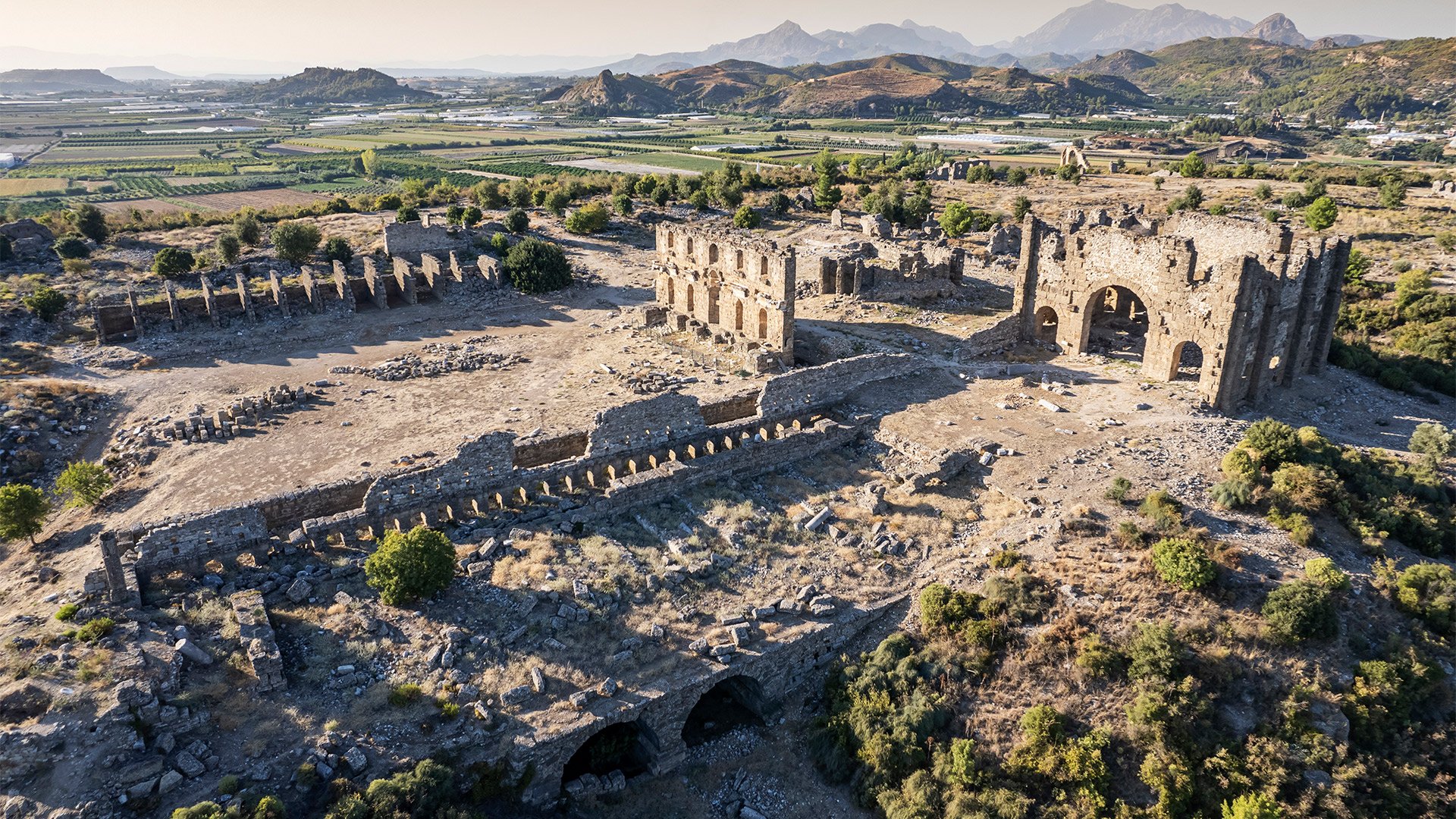
The whisper of the theatre's architect, Zenon, may have impressed the king, but the story of Aspendos is not complete without seeing the work of the other competitor in the legend. Now, let us introduce you to the city's lifelines: the magnificent aqueducts. Located a short walk from the theatre, these structures are not just bridges but a system that pushed the limits of Roman engineering, bringing an uninterrupted supply of water from the northern mountains to the city. At about 1 kilometer long and reaching heights of 15 meters, these arches leave all who see them in awe. Roman engineers, as if defying gravity, managed to push water through pipes across the valley and up to the tower on the other side using pressure towers built at both ends of the valley. It was like applying pressure to one end of a giant water hose and making the water gush out the other, and thanks to this system, the city had a continuous supply of clean water.
To visit Aspendos is to understand the soul of a civilization. The theatre is where that civilization's heart beat, nourished by art. The aqueducts are the blood in its veins, giving it life. What made Rome great was its ability to build both with equal skill and on a monumental scale. In Aspendos, you witness the legendary contest of these two geniuses. If you want to get a closer look at Rome's genius for urban planning and infrastructure, be sure to check out our guide to the Ancient City of Perge, the capital of Pamphylia, located very close to Aspendos.
See These Places While You're Here
While it's hard to leave the magical atmosphere of Aspendos, there are wonderful nearby alternatives to enrich your trip.
Side Ancient City: On this unique peninsula where history meets the sea, you can watch the sunset at the magnificent Temple of Apollo, explore its ancient theatre, and get lost in its historic streets intertwined with modern life. If you want to cool off in the Mediterranean waters after wandering through ancient ruins, you can set your course for the peninsula for (https://www.yerelrehber.com/en/il/antalya).
Kurşunlu Waterfall: An excellent choice for those who want to take a refreshing nature break from their history tour. With its waters cascading from 18 meters, lush green vegetation, and a peaceful atmosphere that is home to hundreds of bird species, Kurşunlu Waterfall offers a relaxing escape.
Frequently Asked Questions
How much is the entrance fee for Aspendos, and is the Museum Card valid? As of 2025, the entrance fee to Aspendos Ancient City is 650 TL. However, since it is affiliated with the T.R. Ministry of Culture and Tourism, you can visit it for free with a Museum Card. We recommend confirming the current fees before your visit.
How long does it take to visit Aspendos and the aqueducts? Exploring the theatre in detail, testing the acoustics, and climbing to the top will take about 1 - 1.5 hours. If you also want to see the nearby aqueducts, it would be ideal to set aside a total of 2 - 2.5 hours.
What events are held at the Aspendos Ancient Theatre? The most famous event at Aspendos is the annual International Aspendos Opera and Ballet Festival. Watching world-renowned performances in this historic atmosphere is a unique experience. You can check their official websites for the festival schedule.
Bibliography
The Ancient City of Aspendos and its Aqueducts have been on the UNESCO World Heritage Tentative List since 2015. For more information on its international significance, you can visit (https://whc.unesco.org/en/tentativelists/6036/).