


 English
 Türkçe
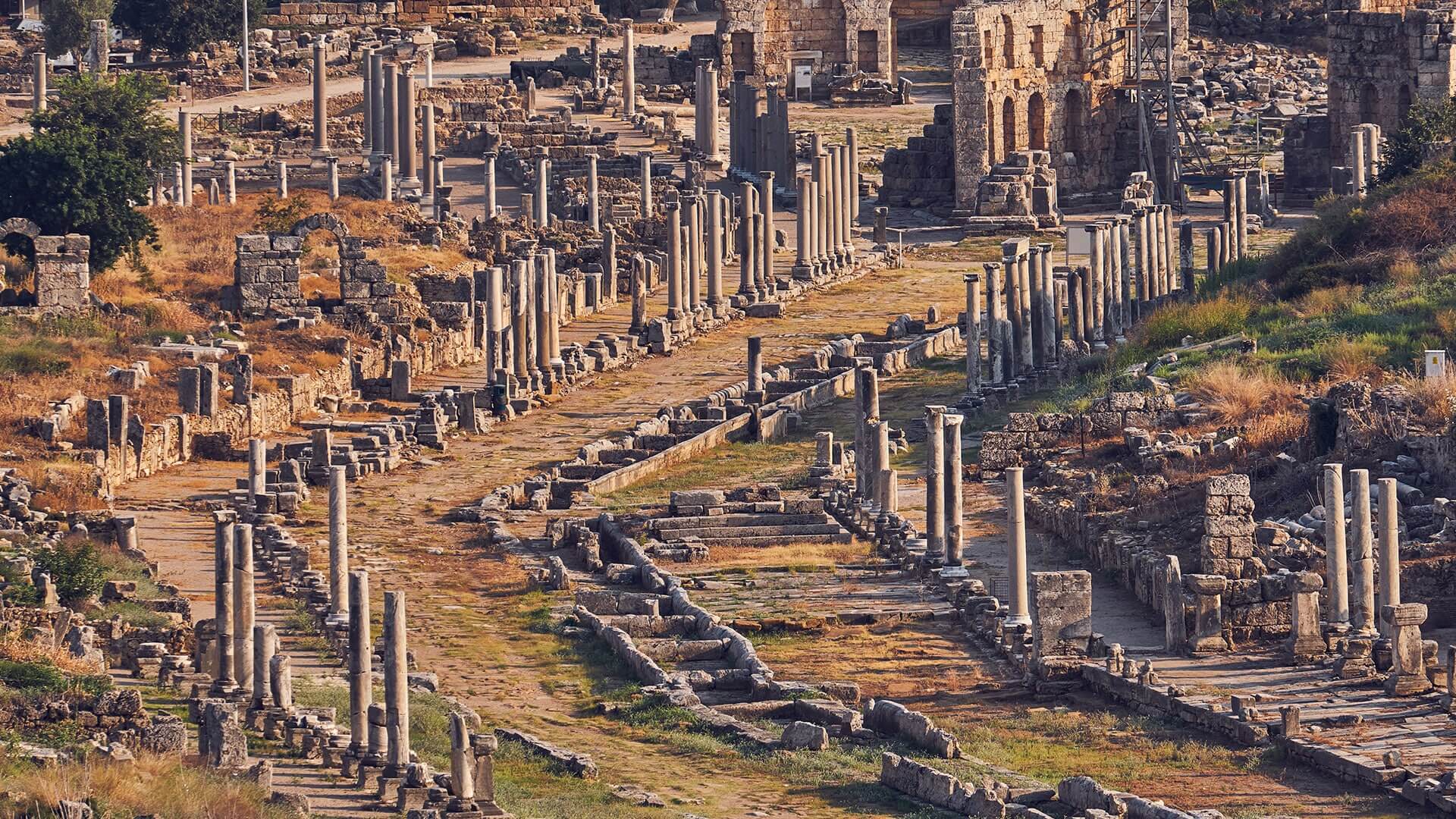
Have you ever dreamed of more than just Antalya's turquoise waters and golden sands—an unforgettable journey back in time? If your answer is yes, we invite you to a magical world where you can hear the whispers of history. Located in the Aksu district, just 17 km from Antalya's city center, the Ancient City of Perge calls you to such an adventure. This magnificent city, once the capital of the Pamphylia region, is not just a pile of ruins but a veritable time capsule. This guide will illuminate the most captivating stops on your list of
things to do in Perge and transform your visit from a simple tour into a true exploration.
You only need to take a few steps through its streets to understand that Perge is no ordinary ancient city. It stands as a living example of holistic Roman urban planning, with its streets, shops, squares, and social structures. This extraordinary level of preservation has earned Perge a rightful place on the UNESCO World Heritage Tentative List since 2009. Now, put on your sandals and prepare to walk through one of the most vibrant metropolises of 2,000 years ago!
Journey back to the Roman era by walking along the Colonnaded Street
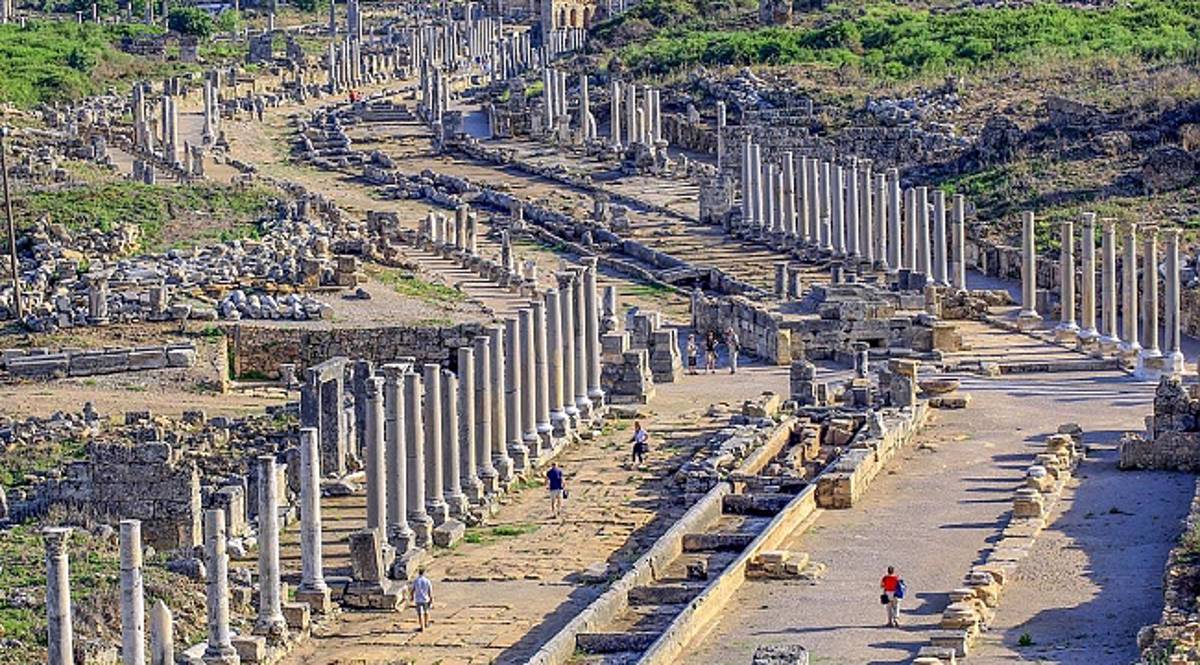
From the moment you step into Perge, the Colonnaded Street greets you and extends into the heart of the city, serving as its main artery. As you walk along this street, you'll feel as though you are following in the footsteps of the Romans who once lived here. The remains of shops lining both sides, the mosaic floors, and the porticoes that offer cool shade reveal how vibrant the commercial and social life once was. When you notice the deep wheel ruts in the stones, worn by the passage of thousands of carts and chariots, you will experience the thrill of touching the tangible evidence of history.
The most striking feature of the street is the 2-meter-wide water channel running right down its center. This channel is the most elegant proof of Perge's engineering genius and the importance it placed on urban life. This system not only supplied the city's monumental fountains and baths but also provided coolness on hot summer days, filling the streets with the soothing sound of water. Even more impressively, directly beneath this clean water channel lies a separate sewage system that carried away the city's wastewater, demonstrating the advanced level of Roman urbanism. This planned structure of Perge places it in a unique position among the
ancient cities of Antalya and allows visitors to virtually relive Roman city life.
Examine the grandeur of the Hellenistic gates and towers
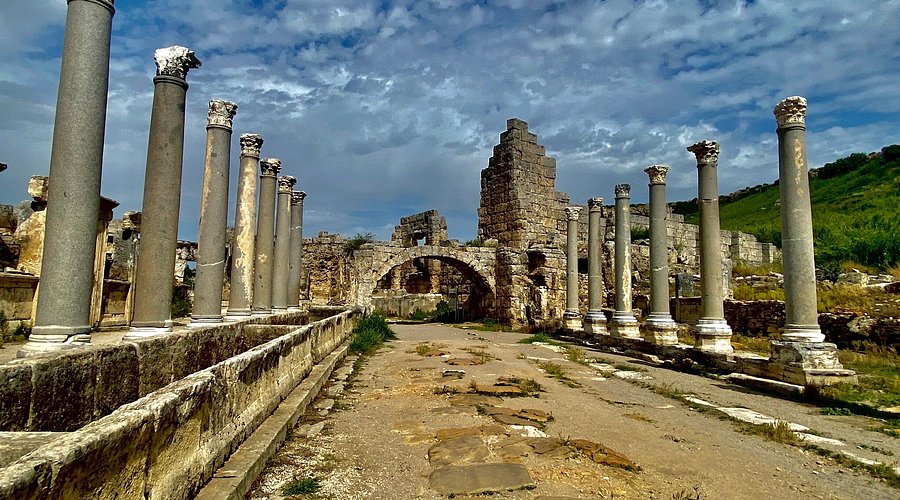
Before you reach the Colonnaded Street, you will pass through the city's monumental entrance. Here, you will first be greeted by massive, round Hellenistic towers dating back to the 3rd century BC. These towers symbolized the defensive power of Perge during its more turbulent times, in the age of the kingdoms that followed Alexander the Great. Their imposing stance is a silent testament to the importance placed on the city's security.
As you pass between the towers, you will find yourself in a unique horseshoe-shaped courtyard. This courtyard is a marvel of military architecture, cleverly designed to trap a potential attacker. However, the story of Perge is hidden in the architecture of this gate. During the period of peace and prosperity brought by the Roman Empire (Pax Romana), this defensive courtyard was transformed into a court of honor. The walls were adorned with niches that housed statues of the city's mythological founders and benefactors, such as Plancia Magna, one of the most powerful women of her time who made great donations to the city. This transformation is the story of Perge's evolution from a defense-oriented Hellenistic city to a self-confident Roman metropolis celebrating its wealth and identity, etched in stone.
Tour the well-preserved stadium and bath ruins
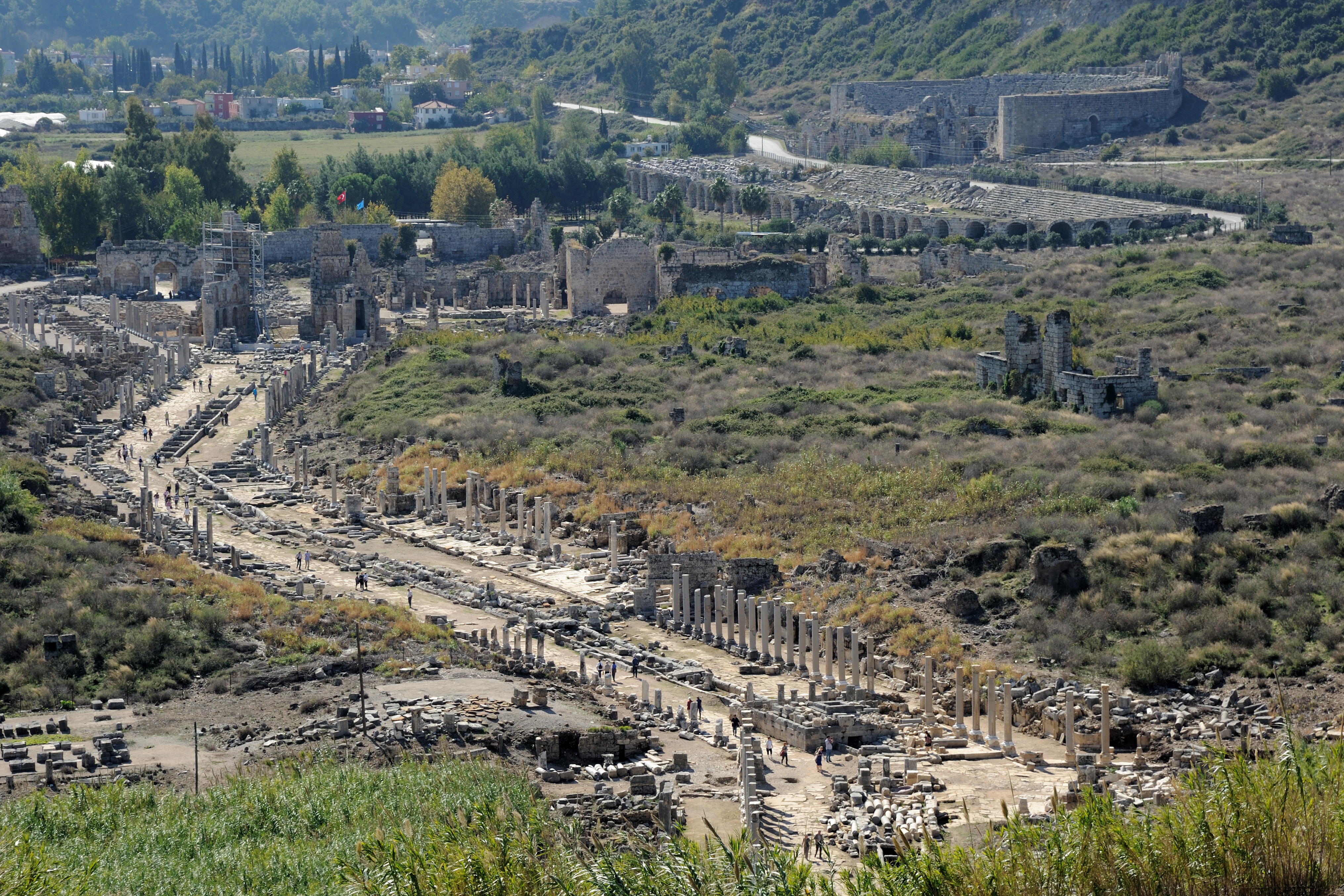
Perge had two main centers of social life: the stadium, where adrenaline-filled competitions were held, and the baths, where relaxing conversations took place. These two structures are the reflections in Perge of Rome's famous Panem et Circenses (Bread and Games) philosophy. The stadium, located right at the entrance of the city, is one of the best-preserved examples from the ancient world. With a capacity of about 12,000 people and its massive dimensions of 234 by 34 meters, you can still imagine the cheers rising from its stands today. Not only athletic competitions but also breathtaking gladiator fights and wild animal hunts were held here. One of the most interesting details of the stadium is that the space under the vaulted arches supporting the seating rows was used as shops. Inscriptions have even been found on some stones indicating the shop owner's name and the type of goods sold, showing us how developed the event economy was in ancient times.
After the excitement of the stadium, you can relax by visiting the baths, where the heart of Roman social life beat. The baths were not just places for cleaning but were multi-purpose social clubs where people met, chatted, made business deals, and rested. You can experience this step-by-step in Perge's best-preserved South Bath. Start your tour from the crowded changing room.
Apodyterium, then move to the cold water pool in the Frigidarium to cool off. After spending some time in the Tepidarium (warm room) to acclimate your body to the heat, you will reach the steamy Caldarium (hot room) to relieve the day's fatigue.
hypocaust, still visible under the floor, is proof of how much importance Roman engineers placed on comfort. After soaking in the ancient atmosphere of the Perge stadium, you should definitely see another pinnacle of Roman engineering, world-renowned for its acoustics.
Nearby Routes to Crown Your Perge Visit
This journey into the depths of history through the stone streets of Perge will surely leave an unforgettable mark on your memory. However, your adventure doesn't have to end here. Since you're already in the area, we have a few great route suggestions to enrich your trip even further:
Aspendos and Sillyon: If you can't get enough of ancient cities, you can add Aspendos, home to one of the world's best-preserved theaters , and the lesser-known but equally impressive Ancient City of Sillyon to your list.
Kurşunlu Waterfall: If you want to surrender yourself to the refreshing embrace of nature after a historical tour, Kurşunlu Waterfall, located very close to Perge, awaits you. The sound of water flowing in a lush green valley will add a peaceful break to your trip.
Antalya Archaeology Museum: For a perfect finale to your Perge tour, you must visit the Antalya Archaeology Museum. When you see the magnificent statues, sarcophagi, and mosaics unearthed during the excavations in Perge and now exhibited in the museum, you will feel that after touring the body of the ancient city, you have also seen its soul.
Frequently Asked Questions (FAQ)
| Topic | Information |
|---|---|
| Location | Antalya, Aksu district. 17 km east of the city center. |
| Visit Duration | It is recommended to set aside at least 2-3 hours to comfortably explore the entire city. |
| Entrance Information | There is an entrance fee. The Museum Pass (MüzeKart) is valid as it is affiliated with the T.R. Ministry of Culture and Tourism. |
| UNESCO Status | The Ancient City of Perge has been on the UNESCO World Heritage Tentative List since 2009. |
What is the best time to visit Perge?
The spring (April-May) and autumn (September-October) months are when the weather is not overwhelming and nature is at its most vibrant. If you plan to visit in the summer, we recommend choosing the early morning or late afternoon hours to avoid the crowds and heat.
Is there anything interesting for children in the Ancient City of Perge?
Absolutely! Imagining ancient games in the vast stadium, running along the colonnaded street, and exploring the labyrinthine rooms of the baths can turn into a fun history lesson for children. The wide-open spaces are also great for them to burn off energy.
Source: Archaeological Site of Perge. UNESCO World Heritage Centre, whc.unesco.org/en/tentativelists/5411/.